
Why it matters here
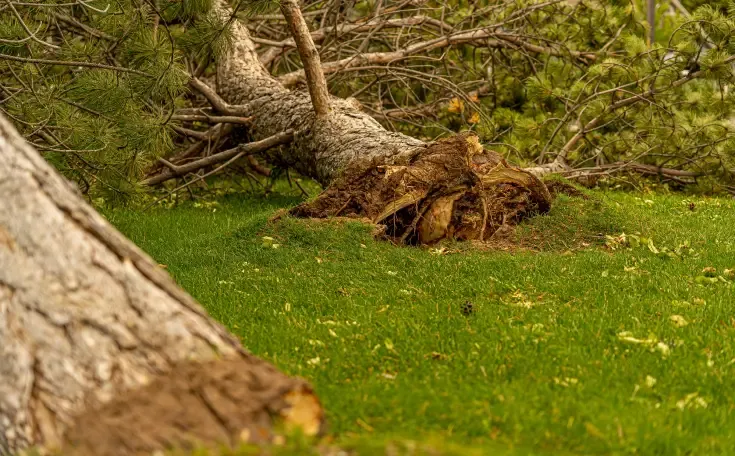
Western North Carolina gets every kind of tree-breaking weather: ice storms and heavy wet snow in winter, fast summer thunderstorms, and the remnants of hurricanes in late summer and fall. Hurricane Helene in 2024 showed how much damage falling trees can do. Most storm failures come from trees that already had a weakness, and most of those weaknesses can be spotted ahead of time.
Storm-prep checklist
- Walk your yard and look up at every large tree within reach of the house, driveway, power lines and play areas.
- Look for dead limbs, broken branches hung up in the canopy and bare sections of crown.
- Check the trunk for cracks, cavities, soft or hollow spots and mushrooms at the base.
- Check forks where two big stems meet in a tight V. These can split under load.
- Check the lean. A tree that leans more than it used to, or has soil lifting on one side, needs attention now.
- Look at limbs over the roof. Anything that could reach the house in wind should be cut back.
- Note dead hemlocks and ash. Pest-killed trees are especially brittle. See our guides on hemlocks and ash trees.
What helps
Deadwood removal and thinning take away the limbs most likely to break and let wind through the canopy.Roof clearance keeps branches from reaching the house. And removing hazardous trees before a storm is always safer and cheaper than removing them from your roof afterward. Our trimming and pruning service covers all of it.
Not sure which trees are a risk? Book a tree health assessment. We will walk the property with you and tell you which trees need work and which are fine.
After a storm
- Stay away from downed lines. Assume every one is live, and call 911 or the power company.
- Don’t cut trees that are bent, twisted or pinned. Wood under tension can spring back with enormous force.
- Take photos of any damage for your insurance company before anything is moved.
- Call us 24/7 at 828-367-9685 for trees on houses, cars or driveways. See emergency tree service.
More from the N.C. Forest Service: NC Trees and Storms: Readiness, Response, Recovery.